Banner Image

About Us

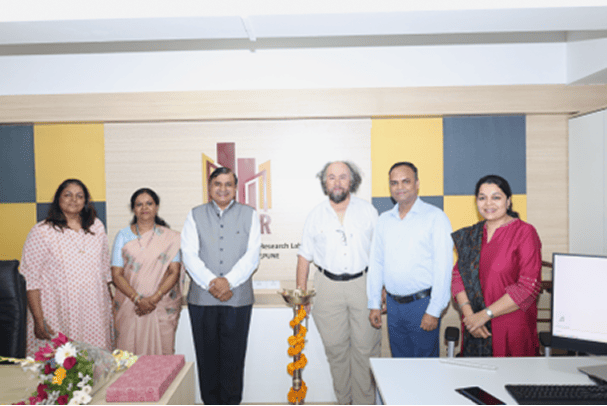
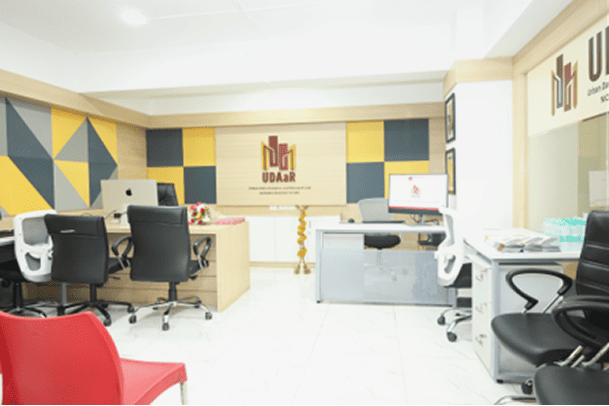
At the Data Analytics & Research Lab, we're passionate about using data to tackle real-world urban challenges. By working closely with various stakeholders, we strive to create innovative solutions that improve urban living, enhance mobility, and promote sustainability.

Scope Icon

Scope

To NICMAR University's students and faculty, serve collaborations with academia, industry and government bodies.

Vision Icon

Vision

Creating smarter, resilient cities through innovative research and collaboration.

Why Join Us Icon

Why Join Us?

If you are interested and passionate to conduct academic research of forward-thinking ecosystem challenges in India and beyond, join us!
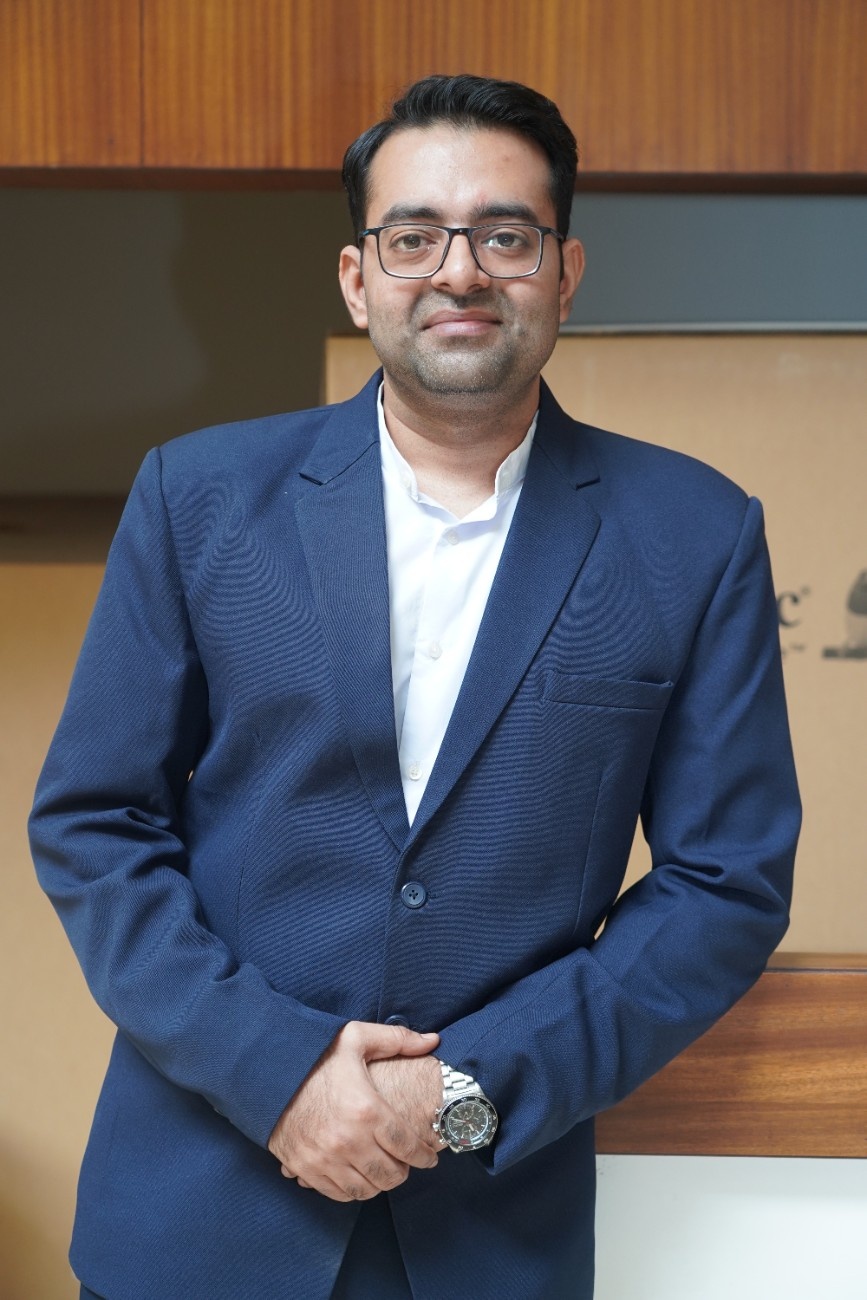
Dr. Kul Vaibhav Sharma

Dr. Kul Vaibhav Sharma

Faculty In-Charge, Data Analytics & Research Lab

The Data Analytics & Research Lab at NICMAR University, Pune, under the guidance of Dr. Kul Vaibhav Sharma, focuses on advancing interdisciplinary research through data-driven technologies, geospatial intelligence, and artificial intelligence applications. The lab promotes innovative solutions for sustainable infrastructure, urban systems, disaster management, and environmental resilience by integrating GIS, remote sensing, machine learning, and deep learning methodologies. Dr. Sharma’s research expertise includes landslide and flood risk assessment, climate analytics, geospatial modeling, urban heat island studies, and predictive infrastructure analytics. With extensive experience in AI-enabled geospatial analysis and scientific data interpretation, he actively mentors students and researchers in developing practical and impactful research solutions. The lab aims to build strong industry-academia collaboration, encourage advanced analytical research, and support innovation-driven decision-making for sustainable development and smart infrastructure systems.

Research Areas

Urban Governance & Leadership Icon

Urban Governance & Leadership

Exploring institutional frameworks, participatory planning, and leadership strategies that make effective urban transformation.

Urban Mobility & Transportation Icon

Urban Mobility & Transportation

Investigating sustainable, equitable, and low-carbon transportation systems to improve urban accessibility and reduce emissions.

Digital and Smart Cities Icon

Digital and Smart Cities

Leveraging digital technologies, IoT, and urban informatics to enhance city operations, governance, and citizen engagement.

Sustainability & Resilience Icon

Sustainability & Resilience

Advancing strategies for environmentally sustainable and disaster-resilient urban development in response to climate and socio-economic risks.

Spatial Analysis & Modeling Icon

Spatial Analysis & Modeling

Applying geospatial tools and modeling techniques to analyze urban performance, support planning, and inform policy.

Urban Transformation Icon

Urban Transformation

Understanding the dynamics of social, technical transitions shaping future cities through innovation, equity, and systemic change.
Banner Image
Collaborations & Impact

Partnering with government bodies and municipal corporations. Engaging with industry leaders to drive innovation. Conducting interdisciplinary research with academic institutions. Supporting community-driven urban solutions through data insights.

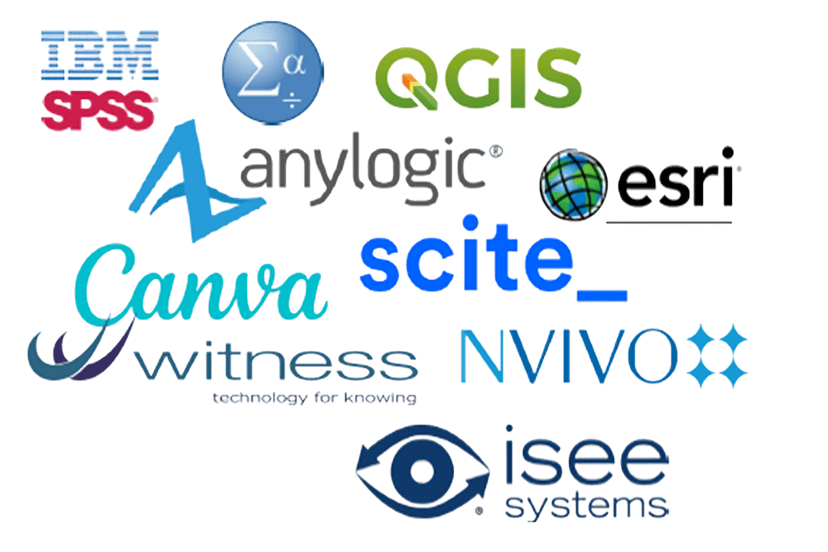
Equipment & Software

Apple Mac M4 Pro

HP Z2 Tower G9

Drone

GPS Tracker

Lenovo Idea Centre

AIO

Measuring Tool

High Resolution Cameras

Research Team

PhD Scholars

dimpy-rathee

Dimpy Rathee

archee-verma

Archee Verma

Masters students

charvi-sawai

Charvi Sawai

shubham-visaria

Shubham Visaria

rushikesh-deshmukh

Rushikesh Deshmukh

nilesh-pawar

Nilesh Pawar

Ongoing PhD Research Projects

01
Low Carbon Travel Behaviour: A framework for Urban Mobility Strategies

Archee Verma

The research examines the factors influencing individuals’ adoption of sustainable and environmentally responsible travel choices in urban areas. The study aims to identify and prioritize the key determinants shaping low-carbon mobility behaviour using established analytical approaches to ensure methodological robustness and practical relevance. Focusing on the Indian context, the research provides insights to support effective policy formulation, behavioural interventions, and sustainable urban mobility planning in developing countries.
Read More
02
Mode Choice Modeling for Micromobility in Indian Scenarios

Dimpy Rathee

The research explores how travelers choose among last-mile transport options such as walking, Public Bicycle Sharing Systems (PBSS), and e-rickshaws in dense urban environments. The study focuses on the Indian context, where diverse socio-economic backgrounds and travel behaviors create strong unobserved preference heterogeneity and uncertainty in mode choice. Emphasis is placed on understanding behavioral patterns, estimating willingness-to-pay (WTP), and deriving policy-relevant insights to support sustainable and user-responsive urban mobility planning.
Read More
03
Enhancing Landslide Risk Assessment and Predictive Analysis through Deep Learning and Geospatial Analysis

Nilesh Pawar

Enhancing Landslide Risk Assessment and Predictive Analysis through Deep Learning and Geospatial Analysis” focuses on developing advanced methodologies for accurate identification and prediction of landslide-prone areas. The research integrates deep learning techniques with geospatial datasets such as remote sensing imagery, terrain parameters, rainfall, and land use information to improve hazard assessment accuracy. The study aims to create predictive models capable of supporting early warning systems and disaster risk reduction strategies. By combining artificial intelligence and GIS-based spatial analysis, the research seeks to enhance decision-making for sustainable land management and disaster resilience.
Read More
04
Exploring Geospatial Decision-Support Methods for Sustainable Urban Systems

Rushikesh Deshmukh

Exploring Geospatial Decision-Support Methods for Sustainable Urban Systems” focuses on the development of advanced geospatial frameworks to support sustainable urban planning and management. The research integrates GIS, remote sensing, and spatial analytics to evaluate urban growth, infrastructure distribution, environmental quality, and resource efficiency. The study aims to enhance decision-making processes by providing data-driven insights for resilient and sustainable urban development. By utilizing geospatial technologies and analytical models, the research seeks to support policymakers and planners in addressing complex urban challenges and improving urban system performance.
Read More
Dr. Kul Vaibhav Sharma

Faculty In-Charge, Data Analytics & Research Lab

NICMAR University, Pune

Dr. Supriya Nene

Dean, School of Architecture and Planning

NICMAR University, Pune
Publications & Reports

Interpretable Landslide Hazard Analysis in the Western Ghats of Maharashtra, India: A Hybrid Machine Learning and Statistical Approach
Optimizing building information modeling through clash detection and resolution for sustainable high-rise construction
Data driven modelling of carbon nanotube reinforced composite plates

Contact us

Join us in shaping the future of data-driven urban development!

The Data Analytics & Research Lab at NICMAR University invites partners from academia, industry, and policy to co-create impactful, data-driven urban solutions.

Email: udaarlab@pune.nicmar.ac.in

Location: NICMAR University, Pune

Social Media Links: https://www.linkedin.com/company/udaarlab

barcode
footer-image