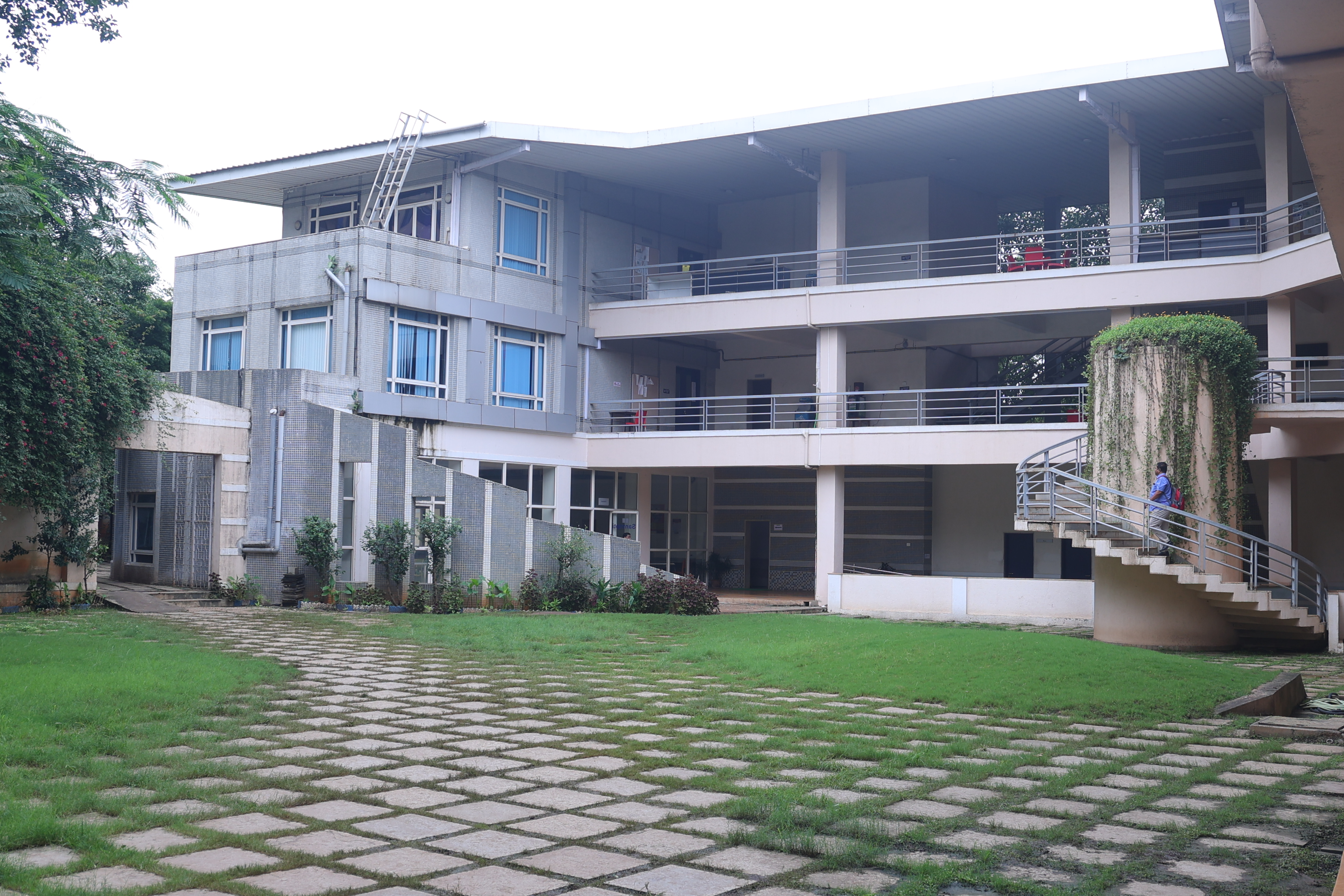
Architecture has a reputation problem. People hear the word and picture someone obsessing over a roofline or the angle of a staircase. That happens. But it misses the point of what architectural education actually does to your thinking.

A good architecture programme doesn't just teach you to design buildings. It changes how you see problems. How you read a space before anyone's told you what it's for. How you think about the relationship between what something looks like and what it actually does. That's a skill set that takes years to build properly, and it's exactly why a degree in this field runs for five years instead of three.

Architecture Is a Way of Thinking Before It's Anything Else

The first thing that surprises most architecture students is how much of year one has nothing to do with buildings.

You're learning to see. To notice how light moves through a space at different times of day. To understand why a corridor feels oppressive at two metres wide but comfortable at two and a half. To make a physical model of something that doesn't exist yet and figure out, from holding it in your hands, whether the idea actually works.

This is spatial thinking, and it's the foundational skill the entire discipline builds on. It's not something you either have or don't. Architecture programmes develop it through sustained, deliberate practice, semester after semester, with the studio model at the centre of everything.

Architecture schools don't teach design the way lecture-based disciplines teach their content. You work. You produce. You get critiqued in front of your peers. You revise. You defend your decisions. Then you start again. That process, repeated across ten semesters, produces the spatial and analytical instincts that a well-trained architect carries into every project they touch.

What a Bachelor of Architecture Programme at NICMAR Actually Covers

The five-year, COA-approved Bachelor of Architecture at NICMAR Pune spreads across ten semesters, and that structure matters. Architecture education can't be rushed. The curriculum starts with foundational skills in the early years and builds toward increasingly complex design challenges as the programme progresses, and that trajectory reflects how the discipline actually develops competence over time.

In the first two years, you're covering the fundamentals: basic design principles, building construction and materials, architectural drawing and graphics, history of architecture, structural systems, and building services. These aren't just background knowledge. They're the vocabulary you'll use every time you sit down at a design problem for the rest of your career.

The middle years get harder. You're designing campuses, urban spaces, and multi-use buildings. You're studying landscape architecture, computational design, estimation and costing, BIM through Revit, and advanced structural systems. By year four, you're writing research papers and producing working drawings that could translate directly to an actual construction process.

The architecture design courses at NICMAR sit within a broader built environment institution, which is one of the things that genuinely distinguishes the programme. You're surrounded by students studying construction management, civil engineering, and urban planning. That cross-disciplinary environment influences how projects get framed and how you think about architecture's relationship to the industry that actually builds things.

Year five has two distinct parts. Semester nine is a four-month professional training placement inside a practising firm. Semester ten is your thesis: a full architectural design project where you define the problem, develop the brief, produce the design, and defend the whole thing.

The Plan Structure That Holds Five Years Together

It's worth understanding the plan structure of a B.Arch programme before committing to one, because how these five years get organised has a direct bearing on what you come out with.

NICMAR's programme runs a Professional Core (PC) track alongside Building Sciences and Applied Engineering (BS and AE) courses in parallel throughout all five years. The PC track covers design studio, professional practice, thesis, and the iterative creative work that sits at the heart of the discipline. The BS and AE track covers structures, materials, building services, environmental systems, and the technical fundamentals of how buildings actually function.

Studio work anchors every semester. Seven to eight courses per semester on average, 28 credits. That's a demanding load, and deliberately so. Architecture doesn't produce capable professionals through light engagement. The real learning happens in the hours you spend working through a problem that doesn't have a clear answer yet.

The Architectural Designer Skills That Employers Actually Look For

Here's something that confuses a lot of people before they start an architecture programme. They assume the goal is to produce beautiful work. Occasionally that's even how it gets measured in a studio critique.

But the architectural designer skills that actually matter when someone's deciding whether to hire you are more specific than that. Can you read a site and understand its constraints without being told what they are? Can you produce a design that responds to the brief, the climate, the budget, and the structural reality of the location all at once? Can you communicate that design clearly, through drawings, models, and presentations, to people who aren't architects?

NICMAR's programme builds these through deliberate repetition. Ten semesters of design studio means ten rounds of defining problems, generating solutions, defending decisions, and iterating. Software literacy comes embedded across the five years: AutoCAD early on, then Revit, BIM, computational design tools, and rendering applications. By the time you graduate, these tools aren't something you learned. They're something you use naturally.

The four-month internship in year five is where it gets real. Enough time inside a professional practice to understand what the industry actually expects, what you're already good at, and where you still have ground to cover.

Architectural Engineering Skills: Where Design Has to Get Honest

A common assumption is that architecture is mostly about the design and somebody else handles the engineering. That assumption tends to fall apart quickly once you're working on an actual project.

The architectural engineering skills that a B.Arch programme develops, including structural systems, building services, construction methods, and materials knowledge, aren't optional extras. They separate an architect who produces buildable work from one who produces drawings that look good but don't survive contact with a structural consultant or a site.

At NICMAR, structural design runs across four progressively advanced courses, covering basic structural concepts in year one, through complex systems, RCC superstructure design, steel structures, and earthquake-resistant design by years three and four. Building services spans three dedicated courses, covering plumbing, HVAC, electrical, fire protection, and MEP coordination. You come out understanding how a building works as a system, not just what it looks like as an object.

Architects who can have a genuine conversation with a structural consultant, or who can identify a services coordination problem on a drawing before it becomes a site issue, carry a considerably stronger profile than those who can't. That technical depth is what makes a graduate immediately useful rather than a project liability in their first year of practice.

Creative Architecture Is Something You Build, Not Something You Have

One of the most persistent myths about architecture as a career is that you need natural creative talent to succeed. Talent helps. It always does.

But creative architecture, the kind that produces work that's genuinely interesting and also genuinely functional, depends less on raw instinct than it does on accumulated knowledge, developed judgment, and sustained practice.

The students who produce the most compelling work by year four or five aren't always the ones who arrived as the most naturally talented designers. They're usually the ones who paid attention in history and theory, who studied how buildings across different periods solved different problems, who understood structure well enough to treat it as a design tool rather than a constraint, who could look at a site and actually read it rather than impose a predetermined idea onto it.

Architecture education builds all of that. Incrementally. Deliberately. Across five years of work that doesn't get easier.

Where a Bachelor of Architecture Can Actually Take You

The career outcomes for B.Arch graduates cover more ground than most students expect going in.

The obvious ones first: Architect, Project Architect, Architecture Designer, Interior Architect, Landscape Architect, Design Manager. These are the roles most B.Arch students picture for themselves at the start.

But the list runs further. Urban Planner, Site Manager, Building Contractor, Architectural Historian, Researcher, and Assistant Professor all represent paths that B.Arch graduates pursue regularly. NICMAR's broader placement network, which sees over 200 companies visit campus for recruitment each year, supports access across this full range.

Further study is also a well-travelled path after a Bachelor of Architecture. M.Arch, Masters in Urban Design, Masters in Project Management, M.Planning, and MBA programmes in construction management and real estate are all options that B.Arch graduates go into. Given that NICMAR has its own postgraduate offerings in construction management, real estate, and project management sitting right on the same campus, those progression routes are particularly accessible.

The decision to study architecture is a five-year commitment. It should be. The skills a strong architecture programme builds don't come quickly. Spatial literacy, structural intuition, design judgment, technical fluency across software and systems. These things take time.

If you find the built environment genuinely interesting, and if you're willing to put in the work across five demanding years, architecture is worth taking seriously. NICMAR's COA-approved programme offers that environment, with the added advantage of sitting inside an institution that's spent over 30 years focused specifically on the built environment sector.

Explore the programme and apply.

Related Articles