
NICMAR Delhi-NCR
NICMAR Hyderabad

About NICMAR & ICFBE 2026

Building the Future of the Built Environment

About NICMAR

The National Institute of Construction Management and Research (NICMAR), is a leading educational institute established by construction industry in 1983. NICMAR is an autonomous, non-government, non-profit organization with the express objective of engaging in activities for the promotion of education, training, research, professionalism and skill formation at all levels of the construction and other allied industries. Besides that, NICMAR’s objectives include undertaking special projects, collaboration with other organizations, dissemination of knowledge through seminars / conferences, publishing literature through case studies, undertaking consultancies etc. Currently NICMAR has its more than 30 000 alumni across globe serving at highest positions and contributing to the infrastructure development.

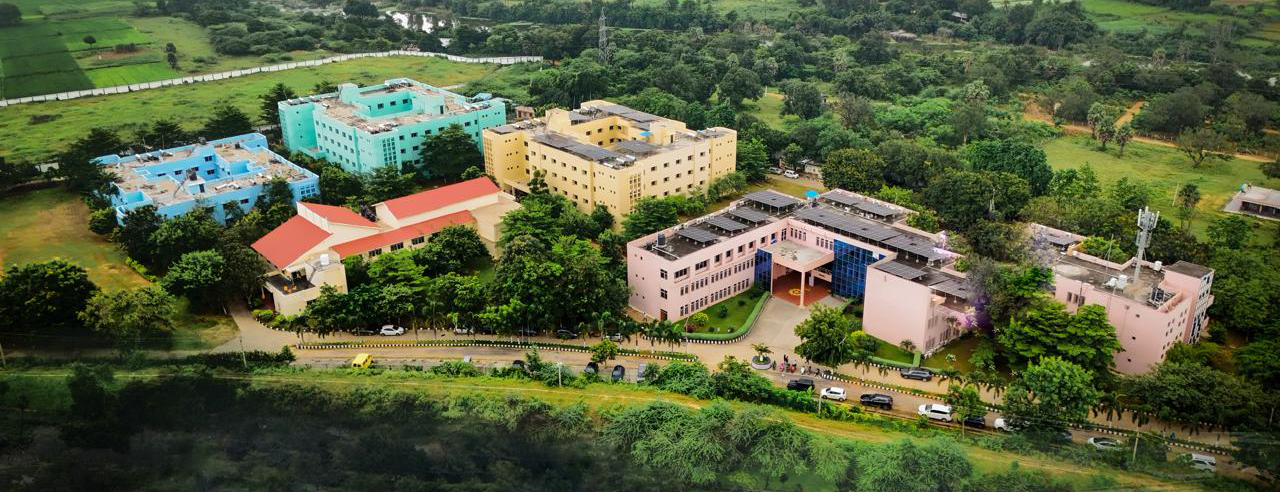
About NICMAR University of Construction Studies - Hyderabad

NICMAR has transformed its Hyderabad campus into NICMAR University of Construction Studies, Hyderabad in 2024, established as a State Private University by the Government of Telangana, is a premier institution dedicated to advancing construction and infrastructure management education. Located in Shamirpet on a serene 32-acre platinum-rated green campus, it features state-of-the-art academic, residential, and recreational facilities. The university houses modern infrastructure and also building the world class supporting infrastructure to meet the global standards. The cohorts are not only engaged in the learning processes but also involved in indoor and outdoor sports with class amenities including a gymnasium, badminton and tennis courts, and a volleyball court. Its environmentally integrated design and comprehensive infrastructure create an inspiring environment for learning, research, and professional development. NICMAR University of Construction Studies offers a variety of postgraduate and doctoral programs focused on the construction and infrastructure sectors in Construction, Project management, Clean and Green Energy, Executive education and many other specialized programs.

NICMAR ICFBE-2026

International Conference on the Future of the Built Environment – ICFBE 2026 will be held during 3rd and 4th December 2026 at NICMAR University of Construction Studies, Hyderabad.

The conference aims to:

  • Explore the cutting-edge trends: Discover the latest advancements in automation, robotics, Building Information Modelling (BIM), and green technologies to revolutionize the built environment.
  • Foster global dialogue: Among researchers, practitioners, policymakers, and students on emerging trends, challenges, and opportunities in the built environment.
  • Promote interdisciplinary and cross-sector collaboration: Between academia, industry, government, and international organizations in shaping resilient, smart, and inclusive built environments.
  • Shape the industry's future: Collaborative discussions on key themes like technology innovation, sustainability, circular economy, carbon neutrality, smart cities, urban planning, leadership, and bridging research-practice gaps.
  • Network with like-minded professionals: Provide a platform for young researchers and professionals to present work, receive feedback, and build networks that support long-term careers in the built-environment sector.
  • Enhance participants' skillsets: Interactive workshops on BIM and project management software, alongside research presentations and PhD conclaves.

Join the industry leaders, visionaries, and changemakers for a ground-breaking Conference that will redefine the future of the built environment.
Key Themes

Technology Innovation: Embracing advanced digital technologies, AI, robotics, automation, BIM, digital twins, 3D printing, and blockchain to revolutionize design, construction processes, and operations in the built environment

Sustainability: Pioneering sustainable practices including circular economy principles, carbon neutrality, low-carbon materials , decarbonization, resilient infrastructure, and net-zero buildings for a greener built environment

Smart Cities, Urban Planning, and Societal Trends: Integrating IoT, intelligent transportation, data-driven urban design, inclusive and accessible planning, urban greening, and human-centric approaches amid societal shifts and climate resilience.

Industry-Academia Collaboration: Bridging research and practice through partnerships, skill development for future workforce, technology transfer, and joint innovation to enhance efficiency in the built environment sector

Leadership: Cultivating visionary leaders equipped for ethical decision-making, geopolitics, financing models, workforce evolution, and strategic stewardship in shaping tomorrow’s-built environment.