India builds fast. New metro lines, expressways, data centres, smart cities, and industrial corridors keep appearing on the horizon. The pipeline never seems to thin out. And yet, for every ambitious project announcement, you'll find a familiar story buried somewhere beneath the headlines: delays, cost overruns, contractual disputes.

The gap isn't in funding or technology. It's in management.

That's exactly why advanced construction management courses have gained so much traction over the last decade. Civil engineering graduates who can run a site technically are valuable. But those who can also manage procurement, handle contracts, read project financials, and lead multidisciplinary teams? They're rare, and companies will compete hard to hire them.

India allocated ₹11.11 lakh crore for infrastructure capital expenditure in 2024-25. Projects under the PM Gati Shakti National Master Plan span rail, roads, ports, and logistics. The sheer volume of work means the country needs a new generation of construction leaders, not just construction workers.

Key Takeaways

  • India's infrastructure spending has reached historic levels, creating substantial demand for trained construction managers.

  • Advanced Construction Management courses bridge the gap between site-level technical skills and project leadership.

  • An MBA in Advanced Construction Management equips graduates to handle procurement, contracts, cost control, and digital project tools.

  • NICMAR offers both an MBA in Advanced Construction Management and an M.Tech in Construction Technology and Management for engineering graduates.

  • Roles like planning engineer, contracts manager, and business development manager all open up after completing the right programme.

Why Is India's Infrastructure Growth Creating Demand for Skilled Managers?

Construction in India operates at a scale that's genuinely difficult to grasp. The National Infrastructure Pipeline targets investments of over ₹111 lakh crore across sectors through 2025. Highways, smart cities, affordable housing, high-speed rail,  each project involves dozens of contractors, shifting regulations, tight budgets, and competing stakeholders.

Technical skills alone can't navigate that complexity. Someone needs to manage procurement cycles, resolve contract disputes before they become arbitration cases, keep cash flows from collapsing mid-project, and ensure the safety and quality standards that increasingly matter on government tenders. That person is the construction manager.

The role of advanced construction management in infrastructure goes far beyond directing labourers on a site. It sits at the intersection of engineering, finance, law, and strategy. Companies like L&T, Afcons, SPCL, and Tata Consulting Engineers recruit heavily from postgraduate advanced construction management programmes because a technically strong graduate with management training steps into leadership far sooner than someone who relies on the job alone to teach them.

Demand is real. Salaries confirm it. And the career ceiling for a trained construction manager in India keeps rising.

What Do Advanced Construction Management Courses Actually Teach You?

This is probably the first question prospective students have, and it's a fair one.

Advanced Construction Management isn't a single subject. It's a bundle of interconnected disciplines that converge on one central challenge: getting a project built on time, within budget, and without legal disaster. Good advanced construction management courses cover the full width of that challenge.

On the technical side, you'll learn project planning and scheduling using tools like Oracle Primavera and Microsoft Project. You'll understand construction methods and equipment, get hands-on BIM (Building Information Modelling) training, and develop a working knowledge of geospatial techniques. These aren't theory-only subjects. Serious programmes pair software training with workshops and site visits.

The management side brings in contracts and claims management, procurement and tendering, cost accounting, construction quality, and safety. Sustainability has also entered the curriculum in a meaningful way, reflecting what the industry now demands.

The best infrastructure management courses push further still, adding strategic management, risk assessment, and the legal frameworks around construction. An MBA in advanced construction management typically also covers business communication, marketing for construction firms, and project finance, because construction managers eventually deal with clients, banks, and government authorities, not just site crews.

The Role of Advanced Construction Management in India's Infrastructure Ambitions

India's infrastructure challenges are structural, not incidental. Projects run late largely because planning fails early. Disputes flare up because contracts lack precision, or the people managing them lack expertise. Quality problems surface when nobody builds in proper checkpoints.

Trained construction managers fix those patterns. They handle the planning burden at the front end of a project, set up the procurement framework that protects all parties, and maintain the control systems that keep a project on course through execution. Their role in large infrastructure projects resembles what a CFO does in a business they don't build the thing, but without them, the building process unravels.

This is why infrastructure management courses have become genuinely career-defining. A civil engineering degree gets you through the gate. A postgraduate qualification in advanced construction management gets you into the room where decisions happen.

MBA in Advanced Construction Management vs M.Tech: Which Path Suits You Better?

Both qualifications matter. The answer depends on where you want to take your career.

The MBA in Advanced Construction Management at NICMAR leans toward the managerial and business dimensions of construction. Its curriculum includes financial management, business development, legal frameworks, and procurement strategy, wrapped around a strong technical core in project planning, quality, safety, and digital tools. Graduates tend to move into roles like contracts manager, planning engineer, or business development manager. It's the degree that prepares you to lead construction projects and, eventually, construction businesses. The programme also carries GAC-PMI accreditation, which puts it alongside internationally recognised project management education standards.

The M.Tech in Construction Technology and Management goes deeper on the technical side. Advanced structural analysis, concrete technology, BIM, tunnelling, prefabrication, metro rail systems, these sit alongside management and analytics courses. If your interest tilts toward solving complex engineering problems rather than managing business relationships, this is the sharper instrument. The programme requires a six-month research project on a live construction site, which gives graduates unusually practical exposure before they even start their first job.

Many students choose based on what they feel they currently lack. The MBA fills the business acumen gap. The M.Tech deepens the technical foundation. Either way, both are two-year, full-time programmes at NICMAR's Pune and Hyderabad campus, and both open up the same core career paths.

How NICMAR's Advanced Construction Management Programmes Build Real Readiness

NICMAR University has operated in this space for decades. The institution has deliberately built its programmes to stay close to what the industry actually uses, not what looks impressive on a syllabus.

Software training covers Primavera, Microsoft Project, Autodesk BIM packages, CANDY, SPSS, and other globally recognised tools used on construction projects across India and internationally. The classroom-to-site connection runs through site visits, workshops, and a mandatory internship that keeps learning grounded in practice.

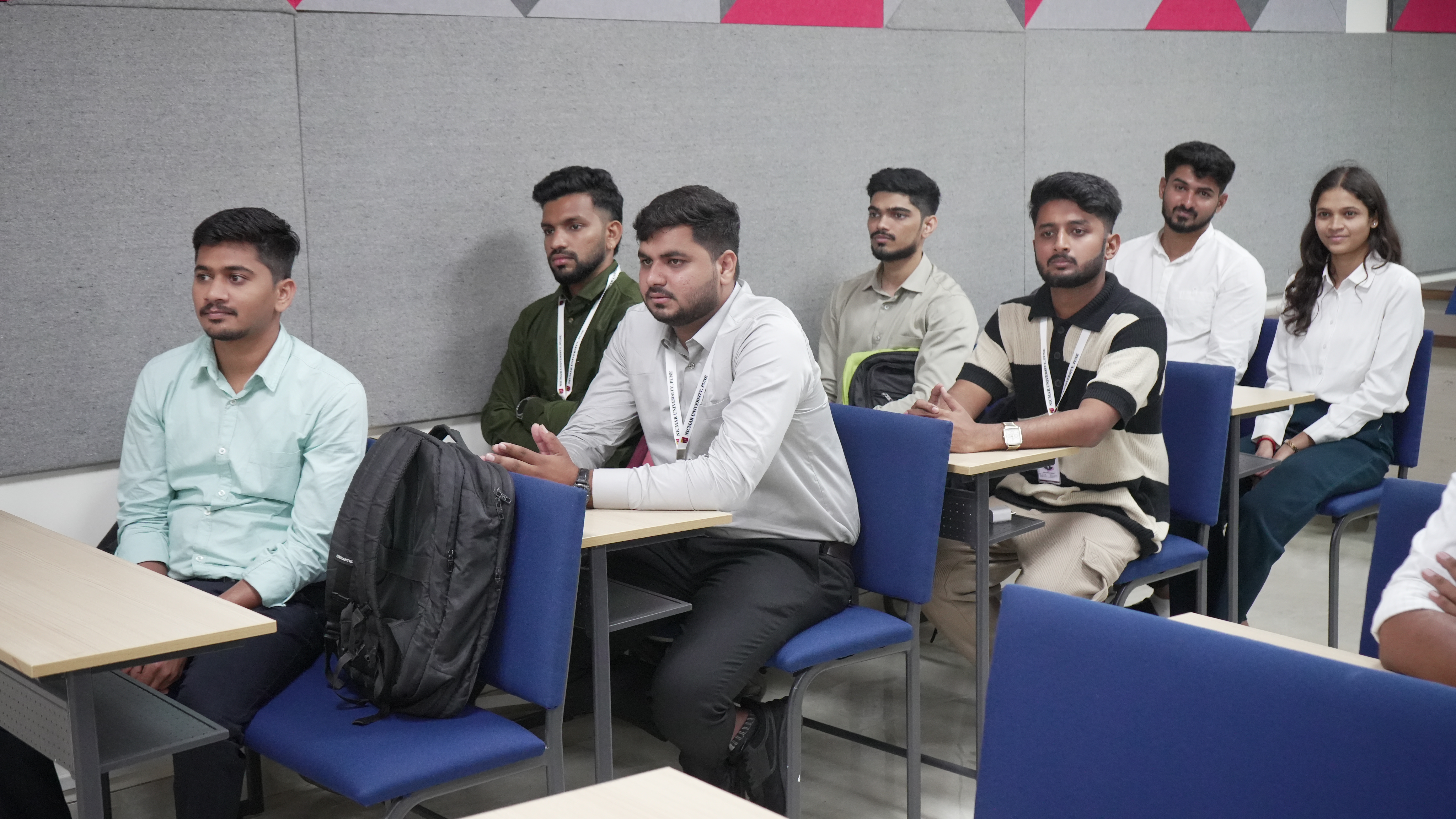
The class profile reflects the programmes' real-world intensity. The average MBA ACM student is 20-22 years old, holds a B.E. or B.Tech degree (90% of the batch does), and handles eight courses per semester. The M.Tech CTM runs at a similar pace, with students selecting specialisations in Transportation Infrastructure or Building Design from Semester 2 onward.

Placement support is serious. Over 100 companies visit NICMAR's campus annually such as L&T, Lodha Group, Reliance Industries, Godrej Properties, Jones Lang LaSalle, IRB Infrastructure, and many others among them. The MBA ACM batch of 2022-24 saw a 98.42% graduation rate, which says something about how well-structured the programme experience actually is.

Companies recruit NICMAR graduates partly because they already know the software, have visited real sites, and have dealt with live project complexity through internships and project work. That reduces the learning curve considerably.

What Career Paths Open Up After Advanced Construction Management Courses?

Several, and they span a wide range of work profiles.

Planning Engineer and Billing Engineer roles suit those who enjoy the analytical and financial tracking side of construction. Contracts and Claims Manager positions attract graduates who like the legal and negotiation dimensions. Safety and Quality Control is another growing path, especially as regulatory scrutiny on construction sites tightens across India.

Site Execution Engineer roles keep you close to the physical build. Business Development Manager positions move you toward client relationships and tendering strategy. Infrastructure Execution Professional is a broader designation that appears across EPC contractors, government project management units, and consulting firms.

The further you go after completing an MBA in construction project management or an M.Tech in CTM, the more these roles evolve toward programme management, project director, and eventually leadership positions within major firms. The qualification shortens the time it takes to get there considerably.

India's infrastructure story is still being written. Every expressway, metro corridor, and industrial park needs someone who understands both the concrete and the contracts. Advanced Construction management courses exist precisely to create those people. And the earlier you start that preparation, the better positioned you are when the next major project goes out to tender.

Related Articles