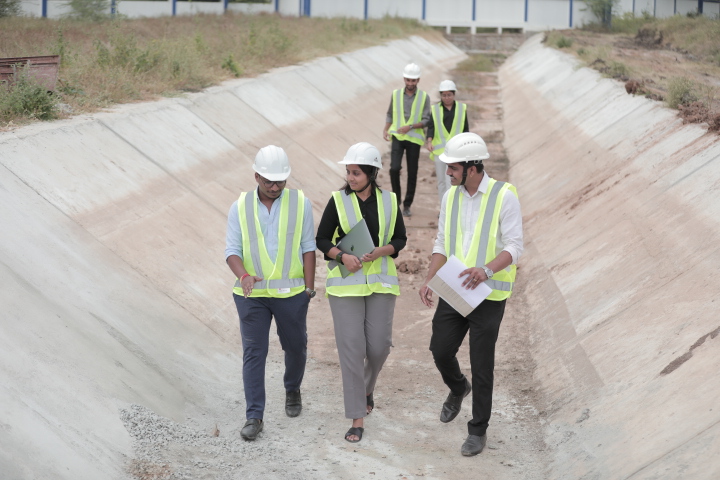
Green Infrastructure Management Roles
This is where most people assume sustainability careers start and end, but the roles inside this category alone cover considerable ground.
An infrastructure sustainability manager works directly on construction or development projects, ensuring environmental compliance from planning through execution. A sustainable planning specialist gets involved earlier, shaping how a project gets designed before ground ever breaks. Health and safety officers with sustainability training have become standard hires on large infrastructure projects, not optional additions anymore.
Then there's green financing, a role that didn't really exist five years ago in its current form. Green financing professionals structure funding for projects that meet specific environmental criteria, working between banks, investors, and project developers. Lead auditors and environmental officers round out this category, handling certification processes and ongoing regulatory compliance for infrastructure projects.
For anyone pursuing an MBA in Real Estate and Urban Infrastructure Management with a sustainability lean, this is the most direct career path available.
Business Analytics and Data-Driven Sustainability
Numbers have taken over this field in ways that surprise people who associate sustainability with field visits and environmental science alone.
A sustainable business intelligence expert analyses environmental data to inform corporate decision-making, often working alongside finance and operations teams rather than separately from them. Environmental risk management executives quantify climate and regulatory risk for company portfolios, a role that's become particularly important for companies with significant infrastructure or manufacturing exposure.
Data engineers focused on sustainability build the systems that actually collect and process environmental data at scale. Without that infrastructure, ESG reporting and impact assessment work simply doesn't happen reliably. This corner of environmental sustainability careers rewards people comfortable with tools like GIS, remote sensing platforms, and statistical analysis software, skills that a strong sustainability management course should be building directly.
Supply Chain and Procurement
Supply chains are where a lot of corporate environmental impact actually originates, which is exactly why this category has grown so quickly.
Green logistics analysts evaluate transportation and warehousing operations for carbon footprint and efficiency, increasingly a standard role at companies with national or international distribution networks. Green procurement and logistics managers go further, actually restructuring vendor relationships and sourcing decisions around sustainability criteria.
This area connects closely with ESG career opportunities more broadly, since procurement decisions feed directly into a company's overall ESG disclosure and scoring. Companies under pressure from investors or regulators to improve their ESG standing often look first at supply chain, because that's typically where the largest and most controllable impact sits.
People, Communications, and Sustainability Reporting
This is the category most MBA applicants don't expect, and it's grown fast.
Sustainability reporting experts compile and validate the disclosures companies are now legally required to publish, a job that demands both environmental knowledge and serious attention to regulatory detail. Corporate communications managers focused on sustainability shape how a company talks publicly about its environmental commitments, increasingly important as greenwashing scrutiny intensifies across Indian and global markets.
Even HR has a sustainability angle now. Training and development professionals build internal sustainability literacy programmes, helping non-specialist employees understand ESG requirements relevant to their roles. Corporate sustainability careers increasingly require this internal communication layer, since policy only works if employees across departments actually understand and follow it.
Marketing and Brand-Side Sustainability Roles
Sustainability has become a genuine brand differentiator, and companies are hiring specifically for this now rather than folding it into general marketing roles.
A brand manager focused on sustainability handles how environmental credentials get communicated to consumers and investors, a task that requires walking a careful line between honest representation and effective marketing. Sales managers in sustainability-focused product categories, particularly in energy, construction materials, and green infrastructure, need both technical fluency and commercial instinct.
This is a smaller slice of the overall job market compared to infrastructure or analytics roles, but it's growing, especially as B2B companies in construction and energy compete on sustainability credentials with increasing seriousness.
What This Means for MBA Applicants
The breadth here matters for one practical reason: it means a sustainability management degree doesn't lock graduates into a single narrow job type. Someone drawn to data work has a real path. Someone who prefers field-based infrastructure roles has another. Someone interested in policy, communications, or brand strategy has options too.
What ties all of these roles together is the underlying training, environmental literacy combined with genuine business and management skills. A sustainability professional moving between these categories over a career isn't unusual, since the foundational knowledge transfers reasonably well across infrastructure, analytics, communications, and supply chain contexts.