Choosing a postgraduate course after civil engineering is not about picking the most popular option. It is about matching the degree to the kind of work you want five years from now, whether that means running a site, managing a portfolio of projects, or moving into infrastructure management.

Most B.Tech civil engineering graduates face the same fork: go deeper into engineering with an M.Tech., or move into leadership through an MBA. Both are legitimate, and both lead to different careers. Picking the wrong one wastes two years building skills you will not use in the role you actually want.

Key Takeaways

  • Postgraduate options after civil engineering split into two broad tracks: an M.Tech. that deepens technical specialisation and an MBA that builds business and leadership skills.

  • NICMAR runs both tracks from the same eligibility base: M.Tech. in Construction Technology and Management, M.Tech. in Infrastructure Project Management, and multiple MBA specialisations.

  • Construction management courses focus on site leadership and cost control, while infrastructure and project management specialisations prepare graduates for broader, cross-sector roles.

  • NICMAR's MBA in Advanced Construction Management holds GAC-PMI accreditation through February 2029.

  • Newer specialisations like MBA in Environmental Sustainability and MBA in Sustainable Energy Management suit engineers targeting ESG, climate and renewable energy careers.

What Courses Can You Do After B.Tech Civil Engineering?

Once you finish a B.Tech in civil engineering, the postgraduate options split into two broad categories. The first stays technical: an M.Tech. deepens what you already studied, with more advanced design, materials or construction methods. The second moves into management: an MBA builds commercial, financial and leadership skills on top of the engineering degree. That fork covers most of what people mean by courses after civil engineering, whether they search with "b tech" in front of it or not.

NICMAR runs programmes across both categories from its Pune and Hyderabad campuses. On the technical side, it offers an M.Tech. in Construction Technology and Management and an M.Tech. in Infrastructure Project Management. On the management side, it runs MBA courses for civil engineers across construction, project management, infrastructure management, real estate and sustainability. Search mba for civil engineers and most lists mix these specialisations together without explaining which fits which career goal. Few institutes in India offer both a technical M.Tech. and this full spread of management-focused MBAs to the same pool of engineering graduates, and that combination is what makes pg courses after civil engineering worth researching properly instead of picking whatever a senior recommends.

M.Tech. or MBA After Civil Engineering: How Do You Decide?

The master's-after-engineering decision usually comes down to one question: do you want to go deeper into engineering, or do you want to manage the people and money around it?

An M.Tech. in Construction Technology and Management suits engineers who want to stay close to design and execution, but with more advanced tools: BIM coordination, construction technology, sustainable building methods and project delivery systems. It keeps you technically credible in a room full of specialists.

An MBA takes the opposite route. It assumes you already know the technical side and focuses instead on procurement, contract law, finance and stakeholder management, the skills that let you run a project rather than build one piece of it. Among master's courses after civil engineering, this is the clearest fork: master's routes that stay technical push you toward design authority, while MBA-track programmes push you toward decision-making authority.

Which Construction Management Courses Fit a Civil Engineer's Background?

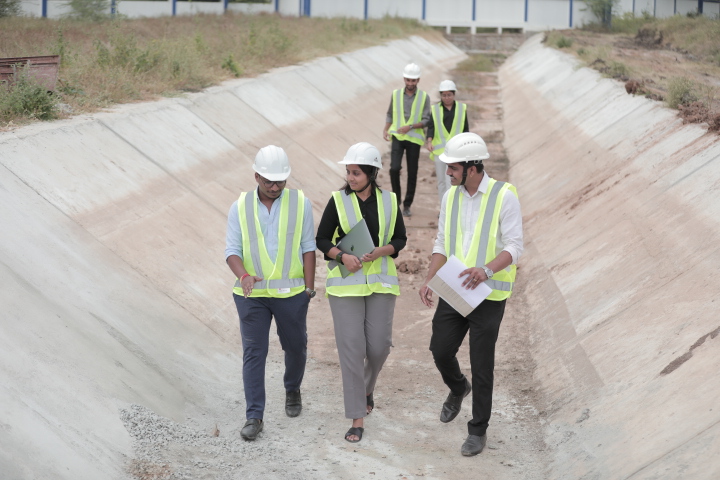
Not all construction management courses teach the same thing, and the difference matters more than the label. NICMAR's MBA in Advanced Construction Management, its flagship programme, focuses on running construction projects end to end: estimation, tendering, planning and control, procurement and site leadership. The programme delivers this through labs, workshops and live site visits rather than lectures alone.

The M.Tech. in Construction Technology and Management covers similar ground from a technical angle: construction methods, equipment, digital tools and sustainable building practices, with less emphasis on contracts and commercial decision-making. An engineer choosing between these two construction management courses should ask what they will be doing on day one of the new job. Estimating quantities and specifying materials points toward the M.Tech. Negotiating contracts and running the project budget points toward the MBA.

MBA in Advanced Construction Management or Advanced Project Management: Which One Goes Beyond a Single Site?

Civil engineers searching for an MBA in construction project management are usually looking for something broader than site-level construction management, a programme that prepares them to run multiple projects, manage risk across a portfolio and work outside a single sector. NICMAR calls this the MBA in Advanced Project Management, covering project controls, risk and claims management, digital project tools and performance analytics.

For engineers who want to move further from site work altogether, NICMAR's general MBA offers an Infrastructure Management specialisation covering how large infrastructure gets funded and structured, including public-private partnerships, while the MBA in Real Estate and Urban Infrastructure Management targets real estate development and urban planning. Both build on the same civil engineering foundation but point toward roles with far less time on site and far more time in front of financiers, regulators and clients.

What Is an MBA in Sustainability Management, and Who Is It For?

Sustainability has moved from an elective topic to a career track of its own, and civil engineers are well placed for it given their exposure to materials, energy use and site-level environmental impact. What most searches for MBA in sustainability management are actually looking for splits into two NICMAR programmes.

The MBA in Environmental Sustainability covers environmental management systems, climate change, life cycle assessment and ESG practices, and prepares graduates for roles like sustainability manager or ESG analyst across industries. The MBA in Sustainable Energy Management stays closer to engineering, covering renewable energy planning, energy auditing and project finance for solar and wind projects. An engineer who wants to work on climate policy and corporate ESG strategy fits the first. One who wants to keep working on physical energy infrastructure, just with financial and planning responsibility added, fits the second.

Matching the Course to the Goal

The fastest way to choose among these options is to work backward from the job, not forward from the degree. Engineers who want to stay technical and hands-on should look at NICMAR's M.Tech. programmes. Engineers who want to run projects, manage budgets, or move into infrastructure management and sustainability roles should look at the MBA specialisations instead.

Find Answers to Common Queries

The best master's programmes for civil engineering graduates match a specific career goal rather than a general ranking. NICMAR's M.Tech. programmes suit engineers staying technical, while its MBA specialisations suit those moving into construction leadership, project management, infrastructure management or sustainability roles.

Choose an M.Tech. if you want to stay closer to design, construction methods and technical problem-solving. Choose an MBA if you want to move into running projects, managing budgets and leading teams. Both build on the same civil engineering degree; they lead to different day-to-day work.

For civil engineers focused specifically on construction, NICMAR's MBA in Advanced Construction Management covers site leadership, estimation and procurement, while the M.Tech. in Construction Technology and Management covers the same ground from a technical, design-focused angle.

Yes. An MBA in Real Estate and Urban Infrastructure Management focuses on funding and structuring real estate and urban infrastructure projects. An MBA in Advanced Project Management focuses on planning, executing and controlling projects across sectors, not specifically on how they get financed.

Yes. Programmes like NICMAR's MBA in Environmental Sustainability and MBA in Sustainable Energy Management target exactly this shift, combining an engineering foundation with the policy, ESG and energy-project skills that sustainability roles require.

Related Articles