An MBA after engineering does not mean stepping away from construction and infrastructure. At NICMAR, it means training civil engineers to lead the very projects they once executed on site.

Most civil engineers reach a point after four or five years on site where technical skill alone stops being enough. Budgets, contracts, teams and client relationships need someone who understands both the engineering and the business behind a project. An MBA in Advanced Construction Management or infrastructure management exists to close exactly that gap. NICMAR has spent decades designing postgraduate programmes specifically for engineers making this move, not for generalist MBA applicants borrowing a construction elective.

Key Takeaways

  • An MBA after engineering builds management skills on top of a technical foundation instead of replacing it.

  • NICMAR designs its postgraduate programmes around engineers transitioning from execution to leadership, not around generalist MBA applicants.

  • Civil engineers can choose between construction management, project management, infrastructure management and real estate specialisations depending on career direction.

  • Admission runs through NICMAR's PG-NCAT examination, or candidates can submit a CAT, MAT, ATMA or CUET PG score instead, followed by a personal interview.

  • NICMAR's MBA in Advanced Construction Management and MBA in Advanced Project Management hold GAC-PMI accreditation from the Global Accreditation Center, valid through February 2029.


Why Do Civil Engineers Consider an MBA After Engineering?

Every civil engineer's career after civil engineering starts the same way: a civil engineering degree after 12th, four years of structural design, surveying and site practice, then a first job on a construction site or with a consulting firm. The technical training runs deep. It rarely covers how a project actually gets funded, negotiated, scheduled against penalty clauses, or handed off between fifteen stakeholders who each want something different.

That gap shows up early. A site engineer who wants to run the project instead of just building it needs contract law, cost control, people management and client-facing communication, skills a technical degree does not teach. This is where the engineering to management transition usually starts. Search for MBA programs for civil engineers online and most results either treat construction as an afterthought or skip industry specifics entirely. That's the reason so many engineers look for an MBA for civil engineers instead of a generic MBA that treats construction as one elective among many.

What Makes an MBA in Advanced Construction Management Different From a Regular MBA?

A regular MBA teaches finance, marketing, operations and strategy in general terms. An MBA in Advanced Construction Management keeps the same management core, but every case study, lab and site visit builds around the CRIP sector: construction, real estate, infrastructure and project management.

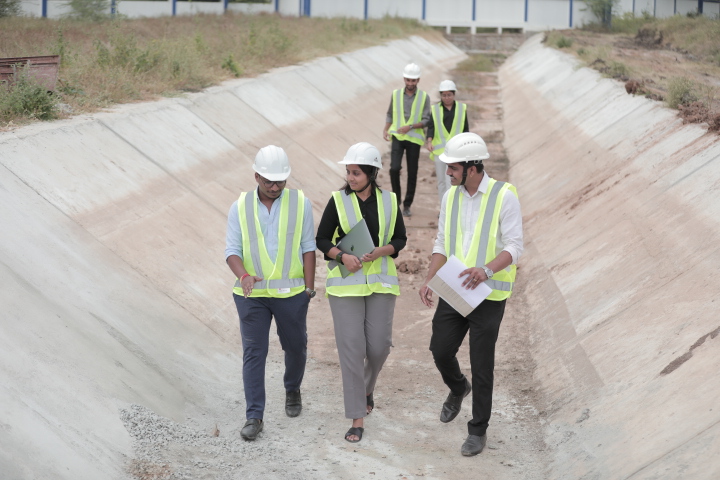
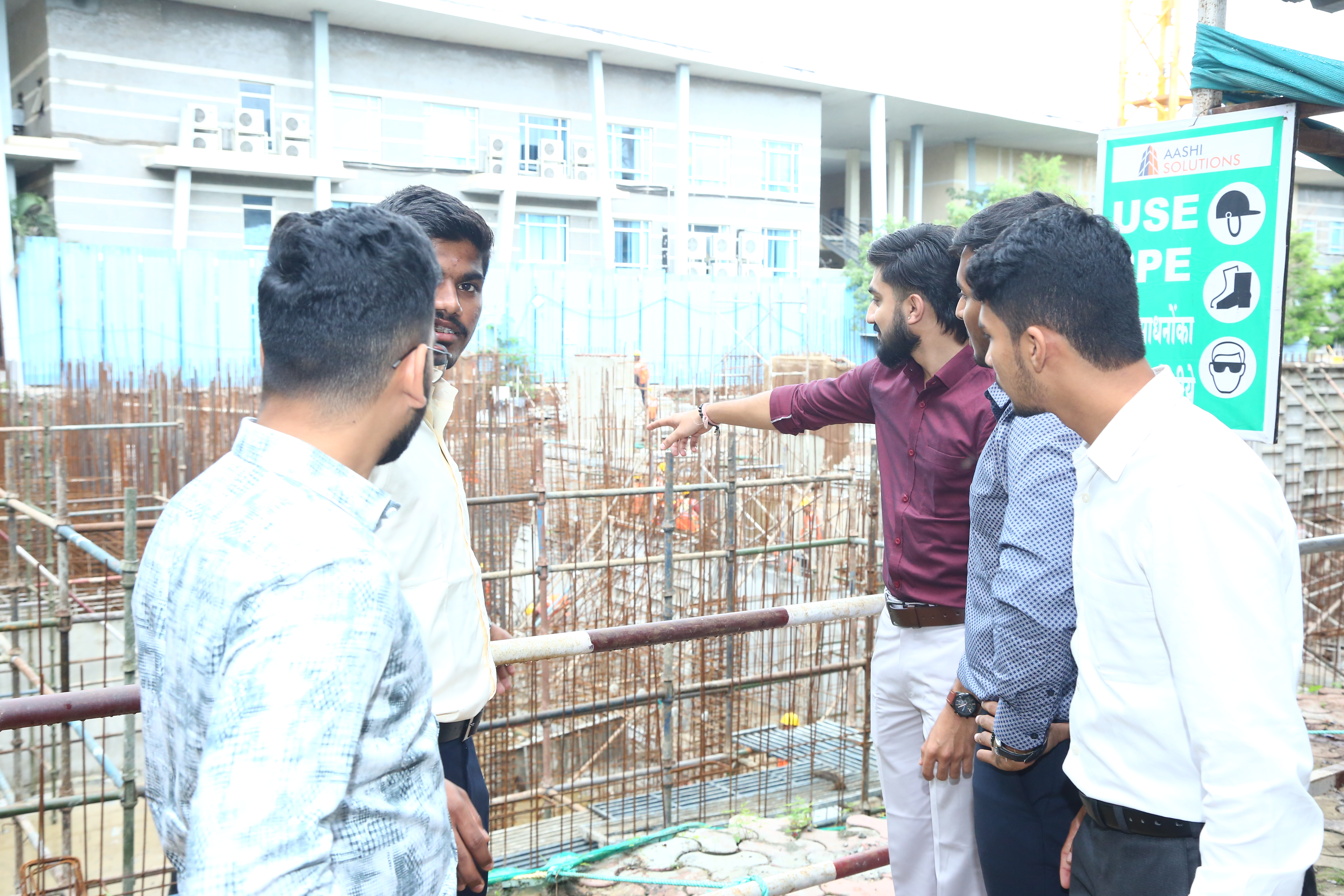
NICMAR's flagship Advanced Construction Management programme runs estimation and tendering labs alongside courses in contract law, project procurement, planning and control, and digital construction tools like BIM. Students spend time on live sites, not just in classrooms, which matters for anyone whose background is already technical. That's the core distinction between MBA courses for civil engineers and standard MBA programmes: the second teaches management in the abstract, the first teaches management as it actually happens on a project site.

What Postgraduate Programmes Does NICMAR Offer for Civil Engineers?

NICMAR runs several postgraduate programmes across its Pune, Hyderabad, and Mumbai campuses, and each targets a different direction within the built environment.

  • MBA in Advanced Construction Management: The flagship programme, built around running construction projects end to end, from estimation to execution.

  • MBA in Advanced Project Management (Hyderabad) : Built for engineers managing large, technically complex projects across sectors. The programme is offered in the Pune campus as an MBA in Project Engineering & Management.

  • MBA in Real Estate and Urban Infrastructure Management: aimed at engineers moving into real estate development and urban infrastructure planning.

  • MBA, with an Infrastructure Management specialisation: the closest fit for anyone specifically searching for an MBA in infrastructure management. NICMAR runs this as a specialisation track within its general MBA, alongside tracks like Supply Chain Management and Business Analytics, rather than as its own named degree.

  • M.Tech. in Construction Technology and Management and M.Tech. in Infrastructure Project Management: run in collaboration with Larsen & Toubro, for engineers who want to go deeper on the technical side rather than move fully into management.

Together, these give civil engineers a genuine range of management courses after civil engineering to choose from, rather than one generic MBA label covering every specialisation under a single syllabus.

Masters or MBA After Engineering: Which Path Fits a Civil Engineer?

The masters or MBA after engineering question comes up often, and the answer depends on where an engineer wants to end up. An M.Tech.. deepens technical specialisation: structural analysis, geotechnical engineering, transportation systems. It suits someone who wants to stay hands-on with design and research.

An MBA after civil engineering, the route NICMAR builds its programmes around, points the other way. It trades deeper technical specialisation for commercial judgement, team leadership and the ability to sit across the table from clients, contractors and financiers. Engineers who enjoy the technical side of the job but want to eventually run projects rather than design them usually find the MBA route gets them to that responsibility faster.

What Are the Eligibility and Admission Requirements at NICMAR?

Eligibility for NICMAR's postgraduate programmes is straightforward: a bachelor's degree in engineering, architecture or planning from a recognised institution, with a minimum of 50% aggregate marks. Final-year students can apply provisionally.

Admission runs through NICMAR's own PG Common Admission Test (PG-NCAT), though candidates who already hold a valid CAT, MAT, ATMA or CUET PG score can use that instead of sitting the NICMAR test separately. NICMAR accepts GATE scores in Civil Engineering or Architecture & Planning for the M.Plan route. Whichever exam route a candidate takes, the final call combines the test score with a personal interview and a rating of the candidate's academic and work profile, so a strong site or design portfolio genuinely counts for something in the process.

Choosing the Right Path

For a civil engineer weighing the next move, the choice usually comes down to how much technical work they want to keep doing day to day. Anyone who wants to stay on the design and analysis side is better served by a technical master's. Anyone who wants to run projects, manage teams and sit in decision-making rooms will find that NICMAR's postgraduate programmes build directly on the engineering background they already have, rather than asking them to start over.

Find Answers to Common Queries

For engineers who want to move from execution into leadership, budgeting, client management or business development, yes. A civil engineering degree proves technical competence. An MBA proves the ability to run a project as a business, not just build it correctly.

Yes. NICMAR's postgraduate programmes accept final-year and fresh engineering graduates alongside candidates with work experience. Admission depends on the entrance test score, academic record and interview performance rather than a minimum number of years on site.

The MBA in Advanced Construction Management focuses on running construction projects: estimation, procurement, planning and site execution. The MBA in Advanced Project Management applies the same planning and control skills to large, complex projects across sectors, not construction alone.

NICMAR accepts its own PG-NCAT score, along with valid CAT, MAT, ATMA or CUET PG scores as alternatives. Candidates applying for the M.Plan programme can use a GATE score in Civil Engineering or Architecture & Planning instead.

A regular finance MBA covers corporate finance broadly, across industries. NICMAR's MBA in Real Estate and Urban Infrastructure Management focuses specifically on financing and developing real estate and urban infrastructure projects, including public-private partnerships, rather than general corporate finance.

Related Articles